
Nutrition Vital Sleep Nutrition Vital Sleep
Low morning light across a birch kitchen counter with a glass of water and a bowl of dark berries

Healthy life years · Estonia

Healthy life years and everyday habits in Estonia

Life expectancy in Estonia reached 79.8 years in 2025. Healthy life expectancy stood at 57.3. The distance between those two numbers is where this page does its work.

Macro of soaked butter beans and barley in a stoneware bowl on a birch board
7hours sleep 30g legumes

Two numbers, not one

Life expectancy at birth tells you how long people live on average. Healthy life expectancy tells you how long they live in good health, without significant limitation. In Estonia, both numbers have improved over the past decades. The distance between them, however, has stayed wide.

That distance is what healthy-aging guidance is really about. It is not a measure of how long anyone will live, and it is not a personal score. It is a population figure, averaged over everyone in the country, and it moves slowly. Reading it correctly means treating it as a direction of travel rather than a verdict on your own body.

The two figures also measure different things. One is a count of years. The other asks a question about those years: do people report living without a long-term illness or activity limitation that shapes their day? Estonia answers that question about twice a decade in its national health interview survey, which is why the second number carries more uncertainty than the first.

Estonia, 2025

Life expectancy at birth
79.8 years
Healthy life expectancy
57.3 years
Years lived with limitation
about 22

Source: Statistics Estonia, life expectancy at birth and healthy life expectancy, 2025 reporting.

Why the gap matters

A long life with many years of poor health is a different outcome from a slightly shorter life lived well. The gap is not a verdict; it is a direction. It suggests that public health and personal habits have room to shape not just how long people live, but what those years feel like.

Sleep, food, movement, and stress all play into the second number more than the first. That has a practical consequence for anyone reading this in Pärnu or Tartu: the habits worth spending attention on are the ones that shape daily function, not the ones that promise extra years.

What the gap is telling you

  • Years of life and years of good function move on different timelines and respond to different inputs.
  • Everyday habits — sleep timing, meals, movement, recovery — show up in function long before they show up in lifespan.
  • A population figure describes a country. Personal habits shape a personal trajectory inside it.

The Estonian nutrition picture

The Global Nutrition Report country profile notes that Estonia is on course to meet three global nutrition targets where sufficient data exist. That is a strong position compared with many countries. It does not mean the average diet is ideal.

National guidance still points toward more plant-forward eating, more legumes and whole grains, and less processed food. The direction of travel is clear even where the daily plate has not caught up.

Source: Global Nutrition Report country profile for Estonia; national dietary guidance for Estonia and the Nordic region.

What actually supports healthy life years

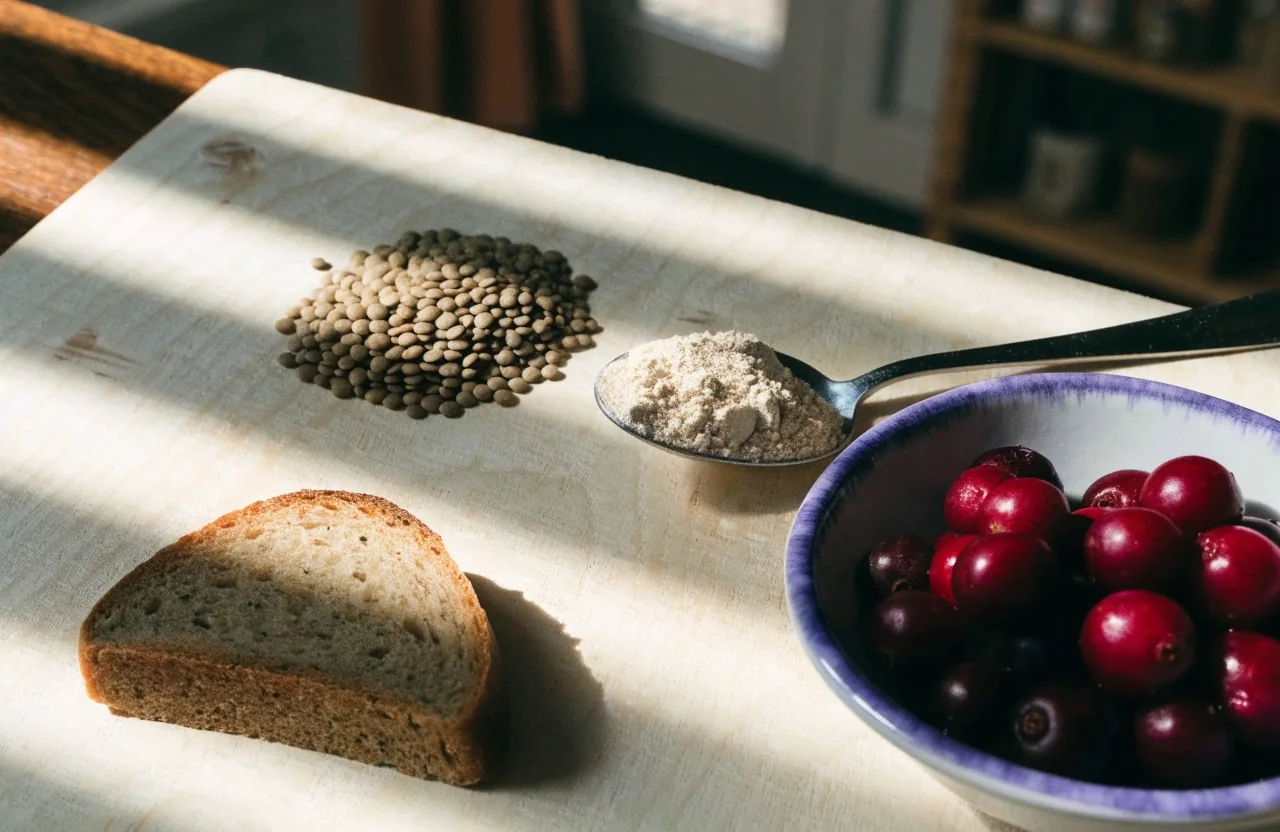
Lentils, rye flour, wholegrain bread and lingonberries arranged on a birch board

There is no single ingredient

The consistent factors in healthy-aging research, and in Estonian public health guidance, are mundane: enough sleep, regular movement, a mostly plant-based diet, moderate alcohol, and stress management. None of these is dramatic. Together they shape function in your sixties, seventies, and beyond. What makes them work is not intensity but the fact that they survive a normal week — a commute, dark December mornings, a busy Thursday.

Where guidance tends to agree: these habits overlap with each other. Better sleep makes movement easier; regular movement deepens sleep; a steadier blood-sugar curve after meals makes the afternoon less of a fight. That is why single-habit fixes rarely hold, and why a small connected routine does.

7–9 h sleep · 150 min weekly movement · plant-forward plate

Moderate alcohol is part of the picture

Nordic and Estonian guidance keeps alcohol in the conversation for a reason: it fragments sleep and adds recovery load. Cutting back — not eliminating — is the realistic version for most people.

Stress management is not optional

Work stress compresses both sleep and meal quality. A short daily habit — a walk at the same time, one meal without a screen — gives the other habits somewhere to land.

Bedside carafe and the edge of a wool blanket in low morning light

Sleep as a longevity habit

Sleep tends to disappear from longevity conversations, which is odd given how much it affects daily function. Seven to nine hours of consistent sleep supports memory, mood, immune function, and physical recovery. In Estonia, the seasonal light patterns make consistency harder in December and June. That is why a stable wake time helps more here than in many other places.

The wake time does the work. Morning light within the first hour anchors the internal clock, and a fixed wake time holds it steady through the summer nights when sunset arrives close to midnight and through the winter weeks when sunrise is still hours away at eight in the morning.

For the seasons that fight back

  • Keep the wake time fixed; let the bedtime drift only slightly on weekends.
  • Get outside within an hour of waking for at least a short walk in daylight.
  • Dim indoor light earlier in June; add morning brightness in December.

Sleep & Recovery Basics covers the timing, light and recovery detail behind this in more depth.

Movement that fits real life

The movement recommendation that matters is the one you will repeat. Walking after meals, taking stairs, cycling to the shop, or swimming once a week all count. Estonian public health guidance consistently emphasizes regular movement as a basic, not a performance. If you enjoy it, you will keep doing it.

Practically, that means aiming at frequency rather than intensity. Three short walks across a day do more for most people than one punishing session that leaves the rest of the week sore. A ten-minute walk after the largest meal of the day is as good a starting point as any, and one that survives rain, snow and a late meeting.

Fatigue & Work Stress looks at how movement, light and desk habits interact across a working day.

People walking and cycling on a coastal town path on an autumn morning

Food as a long-term habit

The best diet for healthy life years is close to what national guidance already suggests: whole grains, legumes, vegetables, berries, fish, and some dairy. Not exotic. Not expensive. The Estonian kitchen has natural versions of most of this. Rye bread, barley, herring, and seasonal berries are not wellness products; they are the everyday base.

The practical test is whether a way of eating survives a normal Tuesday. A plate built around grains and vegetables with a modest portion of fish or dairy is repeatable in a Pärnu apartment in February. A regimen that needs constant shopping and a new ingredient list is not, and it tends to end quietly in the second week.

Everyday Body Care picks up the same habits from the body-care side.

A plate you can repeat

A bowl of oats and a mug by a bright kitchen window
Whole grains and rye
most meals
Legumes
several times a week
Berries and vegetables
daily, in season
Fish or dairy
a modest portion

What is outside your control

Some factors in healthy aging are not yours to change: genetics, the healthcare system, the built environment, and income all matter. That is not a reason to ignore the habits you can shape. It is a reason to keep them realistic. Small, repeatable habits are the ones that move the second number over decades.

What this page can and cannot tell you

  • National statistics describe a population. They are not a personal forecast and cannot predict an individual outcome.
  • Habits here are described as supportive of healthy aging, not as treatments and not as prevention of any condition.
  • If something feels wrong with your sleep, energy or health, that belongs with a qualified professional, not with a general article.

Everyday habits, written down

None of this is complicated. The list below is the practical summary of the guidance above, kept narrow on purpose so it stays doable in a normal week. Treat each line as a direction rather than a target to hit.

7–9 h Consistent sleep Same wake time every day, including the weekends that follow a late Friday.
150 min Weekly movement Walking, cycling, stairs and swimming all count. Frequency beats single hard sessions.
Daily Plant-forward plate Rye, barley, oats, legumes, vegetables and berries as the base, not the side.
Less Alcohol Fewer occasions and smaller servings; it is the easiest single change for many people.
Daily One stress habit A walk, a screen-free meal, a fixed wind-down hour. One is enough to start.

Questions we get about healthy life years

Short answers to the three things readers ask most about the numbers on this page and what they mean for everyday habits.

What is healthy life expectancy?

It is the average number of years a person can expect to live in good health, without significant limitation. It is typically lower than total life expectancy. In Estonia the 2025 figures were 79.8 years of life and 57.3 healthy years.

Can lifestyle habits really change healthy life years?

They contribute, but the outcome is population-level, not personal. You cannot guarantee a specific number of healthy years. You can support habits that tend to help — sleep timing, regular movement, a plant-forward plate.

Is a plant-based diet necessary for longevity?

Not strictly. A plant-forward diet with legumes, whole grains, and vegetables is what Estonian and Nordic guidance emphasizes. Animal foods can still be part of it, and seasonal Baltic fish already is.