

Nutrition guidance for working days
Everyday nutrition for steady energy and fewer crashes
Afternoon fatigue is rarely one bad choice. It is usually a rushed breakfast, a desk lunch, too little water, and a snack that lifts your blood sugar and drops it again.
What this page covers
The food side of staying awake
Whole grains, legumes, berries, protein and hydration — the five everyday levers that shape how a working week feels, in forms that fit an Estonian kitchen and a normal Tuesday schedule. Nothing here is exotic. The interest is in the composition of the meal, not in a special ingredient.
Read it in order, or jump to the part you already suspect is your weak spot: legumes, the grain swap, berries and vegetables, protein distribution, and how much water a desk day actually asks for.
Why energy crashes aren't random
The 3 p.m. slump has a pattern. Meals high in refined carbohydrates and low in fiber and protein digest quickly. Blood sugar rises fast, then falls, and the fall arrives as tiredness, short temper, and a strong pull toward something sweet.
You do not have to eat less. Changing what the meal is made of — more fiber, a real protein source, some fa — usually flattens the curve enough that the afternoon stops being a fight. Lunch is the meal that matters most here, because it sits closest to the hours you need to think.
- Refined-carb lunches digest quickly; fiber and protein slow the release.
- The drop, not the meal, is what you feel at your desk.
- Composition changes are easier to hold than portion changes.
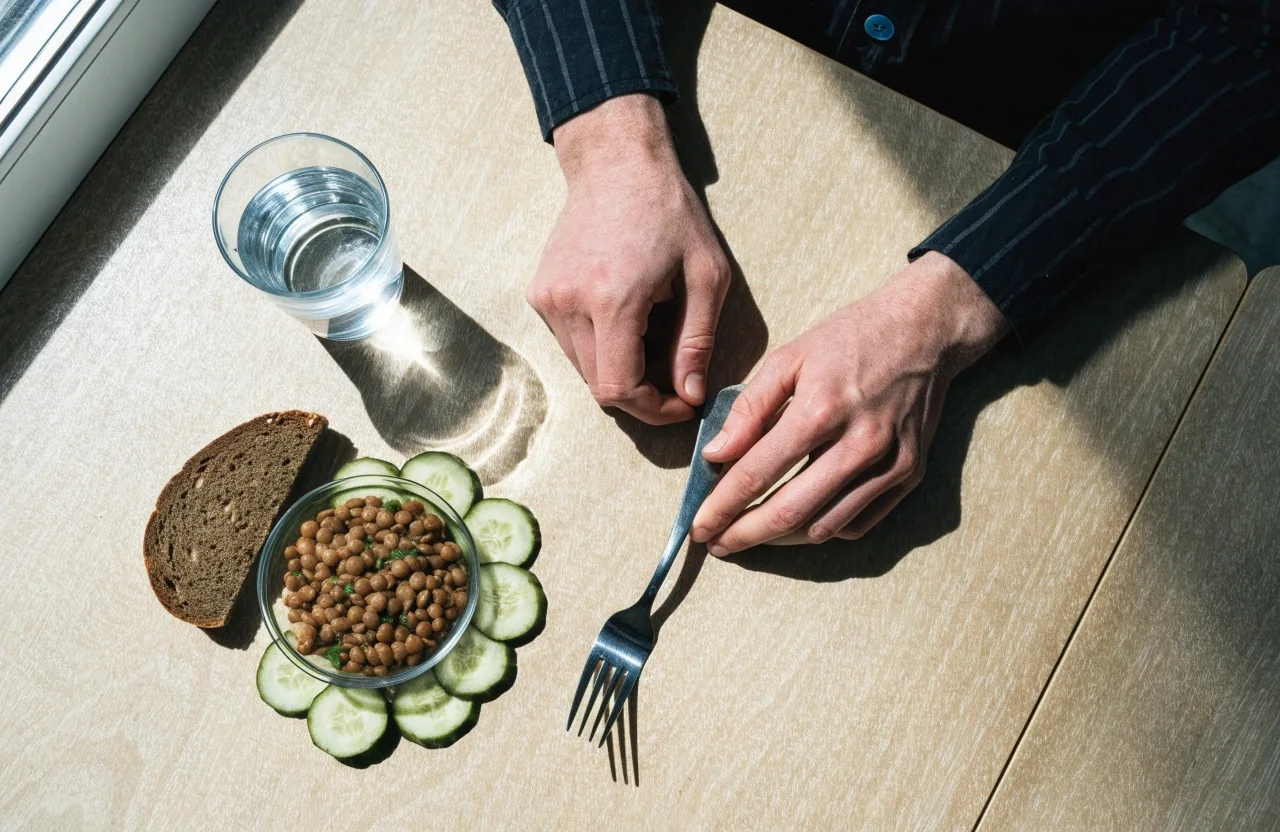
A lunch built from fiber, protein and water behaves differently from one built from white bread and a sweet drink.
Legumes: cheap, filling, recommended
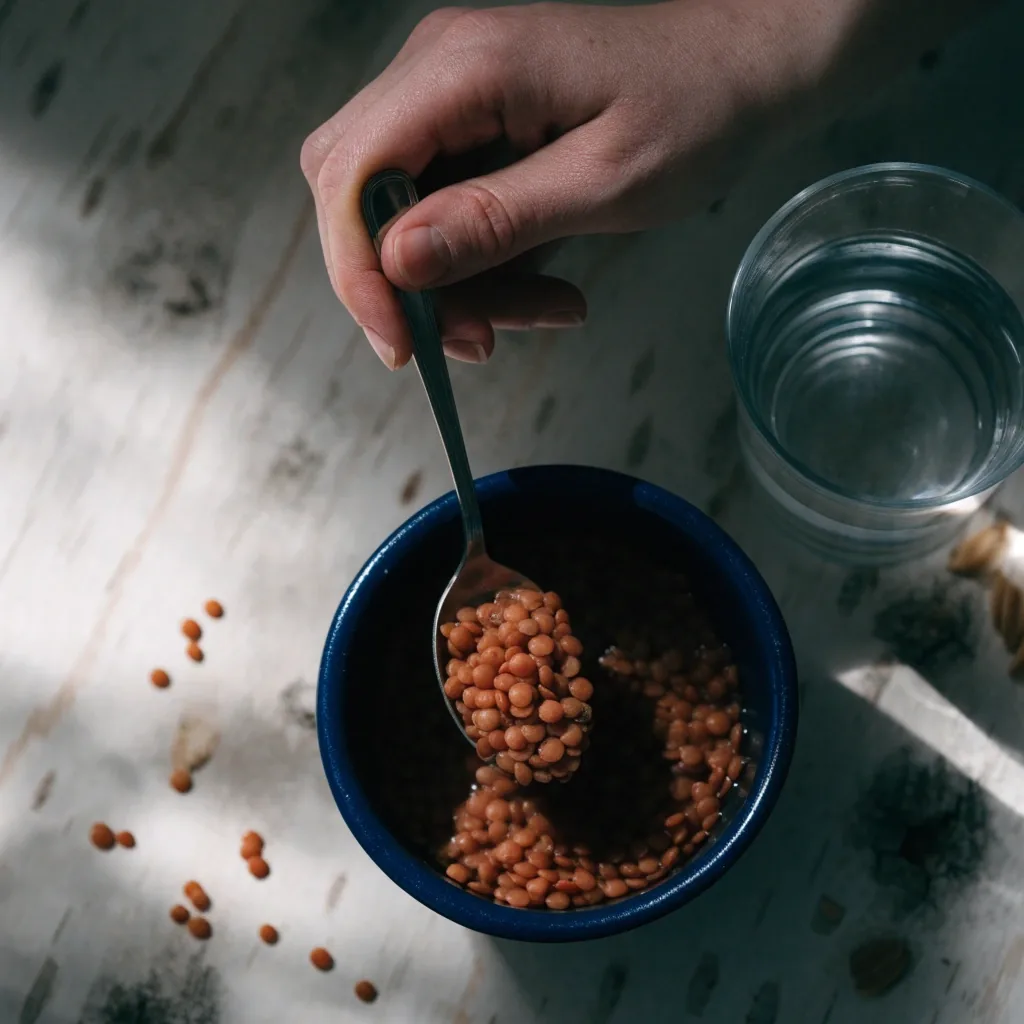
Legumes appear in both Estonian food guidance and Nordic dietary recommendations, and they earn the spot. Lentils, beans, chickpeas and peas carry fiber and plant protein, cost very little, and cook in batches that survive a week of reheating.
If you are new to them, start with red lentils. They cook in about fifteen minutes, need no soaking, and disappear into soups and stews without asking anything of you. A single pot on Sunday covers three lunches.
15 min
Red lentils
No soaking. Simmer in stock with onion and a spoon of tomato, and lunch is handled for two days.
1 pot
Sunday lentils
Cook once, portion into three containers, add something fresh each day so it does not read as leftovers.
1 jar
Chickpeas
A jar in the cupboard is the fastest protein you own. Rinse, dress with oil and lemon, add to any salad.
2 days
Cooked beans keep
Stored cold in a covered container they hold their texture well enough for a two-day window of lunches.
Whole grains instead of white
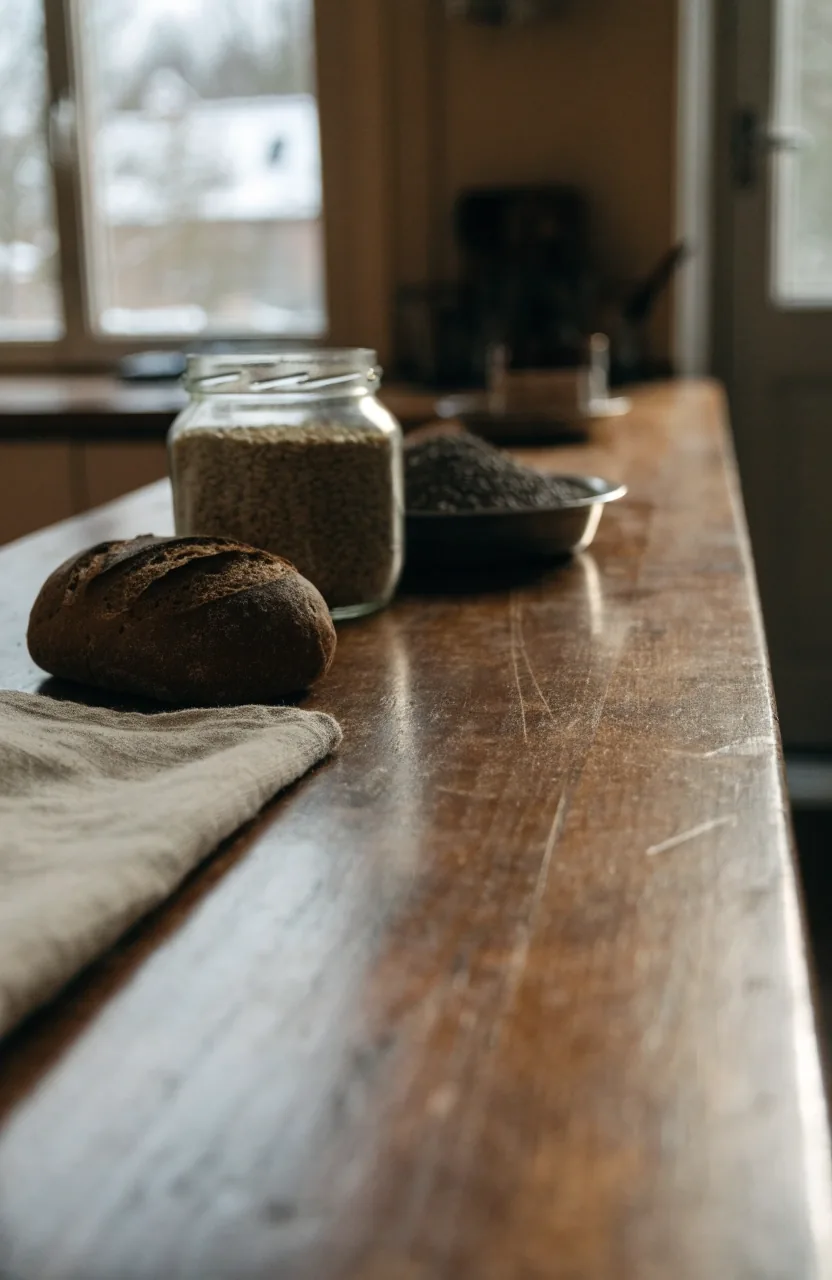
Rye bread, oats, barley and buckwheat are everyday items in Estonian kitchens, and they behave differently from white wheat. Their fiber content slows digestion, which means a steadier release of energy across the hours after lunch rather than a spike and a slide.
This is a balance question, not a ban. White bread is not the problem; white bread carrying the whole lunch is. Move the weight toward whole grains at the midday meal and the afternoon usually answers for itself.
Rye
Dense, sour, filling. A slice beside soup or salad carries the meal further than a roll does.
Oats
The cheapest steady breakfast in the shop. Base for the answer further down this page.
Barley
Pearl barley in soups and pilafs; its texture holds up in a lunchbox far better than pasta does.
Buckwheat
Fifteen minutes in salted water. Works as the grain under almost any legume or fish component.
Berries and vegetables: the everyday part
Berries are one of the easiest additions to a working diet. Frozen berries are as useful as fresh ones, cost less out of season, and take under a minute into yogurt, porridge, or a blender.
At the shop
A bag of frozen lingonberries, blackcurrants or mixed berries costs less than the fresh punnet and keeps for months in the freezer drawer.
At the plate
A handful of something green or orange at lunch and dinner matters more than any single ingredient a magazine calls special.
If you track one habit from this page, make it the vegetable on the lunch plate. It is the change that survives a busy week, because it does not require cooking anything new — only adding one thing to what you already eat.
Protein: enough, spread out
General guidance for healthy adults sits around 0.8 to 1.2 grams of protein per kilogram of body weight per day, and older adults often do better at the higher end of that range. What matters practically is distribution.
Most people eat almost no protein at breakfast, some at lunch, and most of it at dinner. Spread across the day, it supports steadier energy and better muscle maintenance — the second one matters more as the years pass.
Distribution across the day
Breakfast
often close to nothing in a normal weekday
Adding one egg, a spoon of seeds, or plain yogurt with oats changes the morning without a new recipe.
Lunch
the meal that decides your afternoon
Legumes, fish, chicken or cottage cheese in a real portion — this is the slot that carries most of the day.
Dinner
usually where people already do well
Keep it. The gain is not in adding more here; it is in moving some of it earlier.
These are general food-based ranges for healthy adults, not individual advice. If you manage a health condition or take medication, run changes past a doctor or dietitian first.
Hydration, without the fuss
Most adults need somewhere around 1.5 to 2 liters of fluid a day, more in summer or on days you exercise. Estonian workplace health guidance points at roughly 1.5 liters as a working target. Water is the simplest source and the one with no interference attached.
Coffee and tea count toward the total, but they do not replace water outright. In practice, the afternoon cup is the one worth watching: caffeine taken late enough to matter is the easy way to lose the sleep that your energy actually runs on. Keep a full glass within reach and refill it when you stand up — that is the whole method.

A realistic Estonian plate
A typical good lunch here looks like this: a base of rye bread or barley, a legume or fish component, a vegetable, and water. It does not need to look like a magazine photograph. It needs to be repeatable on a Tuesday when you have twenty minutes.
Base
Rye bread, barley, oats or buckwheat. This is the fiber floor of the meal, and the part most desk lunches skip.
Protein
Lentils, beans, chickpeas, fish or cottage cheese. One real portion — not a garnish, not a slice of ham on bread.
Vegetable
A handful of something green or orange — cucumber, carrot, cabbage, whatever survived the fridge. Fresh or from frozen berries alongside.
Water
On the desk while you eat, not fetched at four o'clock when the headache has already arrived.
If you cook at home, batch-cook once or twice a week — a pot of legumes, a tray of roasted vegetables, a grain cooked in stock. That single habit solves most of this page before the week starts.
What to skip
We do not recommend detoxes, juice cleanses, or meal-replacement shakes as everyday solutions. They do not do anything a normal balanced meal does not, and they are hard to sustain past the first enthusiastic week.
The same goes for anything promising to fix your energy in a week. If a product claims a result that fast, the promise is doing more work than the product is. The habits on this page are slower and less photogenic, but they are the ones that are still in place in six months — and they cost much less than the alternative.
Nothing on this page is medical advice. It is everyday food guidance for healthy adults. If you are pregnant, managing a condition, or taking medication that affects appetite or blood sugar, talk to your doctor before changing how you eat.
Questions we get most
Short answers, written the way we would answer them over the counter.
What is the best breakfast for steady energy?
Oats with plain yogurt, berries, and a spoon of nuts or seeds covers fiber, protein and some fa. It holds considerably longer than cereal or toast with jam, and it takes about two minutes on a weekday.
Do I need supplements for energy?
Most healthy adults do not, if their diet is varied. Vitamin D is a common exception in Estonia during the winter months, and it is worth discussing with a doctor if you spend most of the day indoors. Anyone selling you an energy supplement should be asked what it does that a cooked lunch does not.
Is coffee bad for energy?
Coffee helps in the short term and begins to interfere with sleep if you keep drinking it after mid-afternoon. That interference is the mechanism worth worrying about, not the cup itself. If your day depends on three cups before noon, treat the food and sleep side of the page first and see how much caffeine you still need.
Should I eat five small meals a day?
There is no single right answer. Three balanced meals plus one or two snacks works for most people, and so does a different pattern for someone whose working day is shaped differently. Composition matters more than the number of sittings.
Where this page leads next
Food is one lever. How well you sleep and how much of the day you spend sitting still are the other two, and they shape each other. If the afternoon slump is your main complaint, the sleep and recovery guide is the natural next read.
Practical notes
- Batch-cook a grain and a pot of legumes once a week; assemble lunches from those two.
- Keep frozen berries and a jar of chickpeas on hand — they cover most gaps in a rushed week.
- Watch the afternoon coffee before you change anything else about your diet.
Written for readers in Estonia. General food guidance for healthy adults — not a substitute for individual medical advice.